
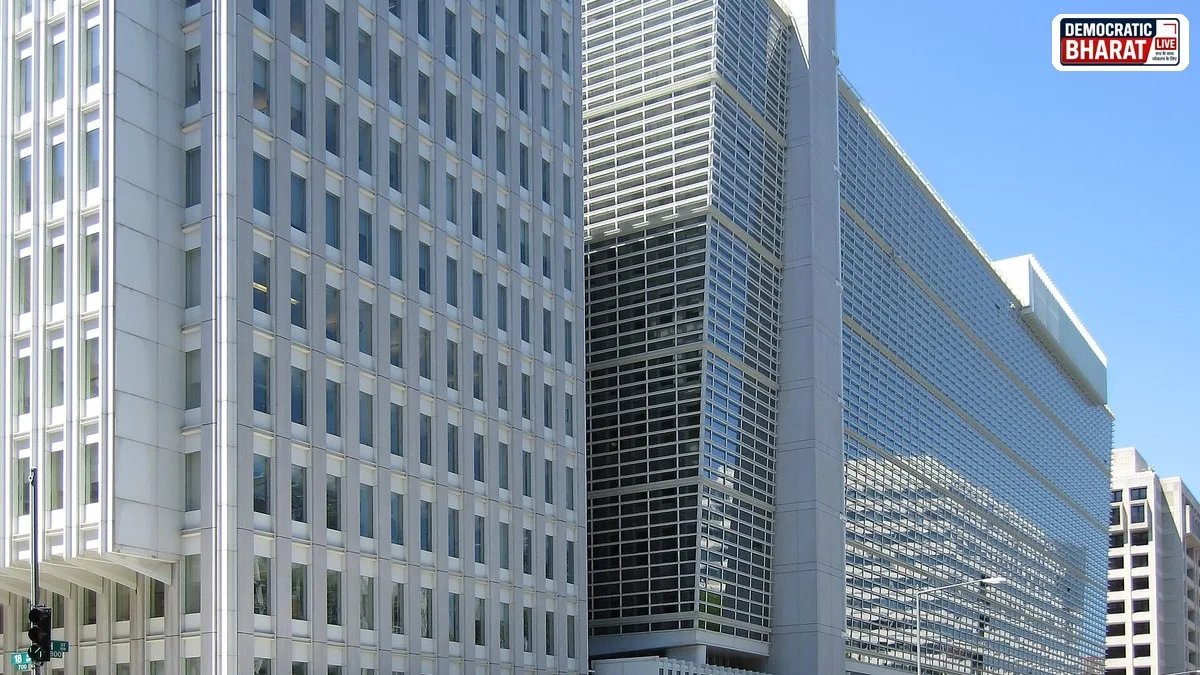
The World Bank is an international financial institution that provides loans and financial assistance to governments in developing countries. Established in the mid twentieth century, it operates as part of the broader United Nations system. Its primary mission focuses on long term economic development, infrastructure building, and poverty alleviation across the globe. By pooling resources from wealthy nations and international capital markets, the institution serves as a critical bridge for financial stability and growth in regions that lack access to traditional commercial banking services.
इस खबर में
Unlike commercial banks, this institution does not aim to maximize profit from its lending activities. Instead, it offers low interest loans, zero to low interest credits, and grants to countries that face severe financial constraints. The organization works closely with member nations to identify critical areas of need, such as education, health, agriculture, and environmental sustainability. Through comprehensive policy advice and technical assistance, the bank helps governments build robust institutional frameworks necessary for sustained economic prosperity and social progress.
History And Origins Of The Bank
The origins of the World Bank date back to the United Nations Monetary and Financial Conference held in July 1944. Commonly known as the Bretton Woods Conference, this gathering brought together delegates from numerous nations to plan for the post World War II international economic order. The institution was officially created alongside its sister organization, the International Monetary Fund, to restore war torn economies and establish stability in international currency exchange rates and trade.
Initially, the primary focus of the bank was to finance the reconstruction of European nations devastated by war. Over the decades, as European recovery progressed, the institution shifted its mandate toward assisting developing countries in Asia, Africa, and Latin America. Its membership includes a vast majority of the countries around the world, each holding voting power proportionate to their financial contributions. This governance model ensures that member states maintain a shared responsibility in steering the policies and financial allocations of the organization.
Core Institutions And Structure
The World Bank is not a single bank in the traditional sense, but rather a specialized agency comprising two main development institutions owned by its member governments. The first is the International Bank for Reconstruction and Development, which provides commercial grade loans to middle income and creditworthy low income countries. The second is the International Development Association, which focuses specifically on the world poorest countries by providing interest free loans and grants to stimulate basic service delivery.
Read this also: What Is the IMF and How Does It Support Global Economy
In addition to these two primary bodies, the wider World Bank Group includes institutions that deal with private sector investments, investment dispute resolution, and multilateral investment guarantees. Together, these entities work to mobilize private capital and provide risk mitigation tools for businesses operating in emerging markets. Member countries govern the organization through a Board of Governors and a Board of Directors, ensuring democratic representation and accountability across all participating nations.
Funding Sources And Operations
To finance its extensive lending operations, the World Bank relies primarily on its high credit rating to borrow money on international capital markets. By issuing bonds to institutional investors, the bank can raise large sums of capital at favorable interest rates and pass those financial advantages on to developing nations. This financial engineering model allows the institution to function efficiently without relying solely on direct government donations, maintaining a sustainable capital base for ongoing projects.
Before approving any financial assistance, the bank conducts rigorous economic research and project appraisals to ensure feasibility and accountability. Governments applying for loans must submit detailed proposals outlining how the funds will be used to achieve sustainable development outcomes. The organization also monitors project execution to ensure transparency and proper management of public resources, minimizing corruption risks and maximizing the social return on investment for local communities.
Criticisms And Future Challenges
Despite its significant contributions to global development, the World Bank has faced various criticisms over the years. Some observers and civil society organizations argue that certain structural adjustment policies attached to loans have historically imposed heavy social costs on vulnerable populations. Critics have also raised concerns about governance structures, suggesting that major wealthy nations hold disproportionate influence over policy decisions and voting shares compared to developing member states.
Looking forward, the institution continues to adapt its strategies to address modern global challenges, such as climate change, pandemics, and economic inequality. Leadership emphasizes the importance of sustainable transitions and green energy investments while maintaining its core mission of eradicating extreme poverty. Researchers, policymakers, and interested observers can consult the official website of the World Bank for comprehensive updates, detailed project reports, and statistical data concerning global financial health.
Frequently Asked Questions (FAQ)
What is What Is the World Bank?
The World Bank is an international financial institution that provides loans and financial assistance to governments in developing countries. Established in the mid twentieth century, it operates as part of the broader United Nations system. Its primary mission focuses on long term economic development, infrastructure building, and poverty alleviation across the globe. By pooling resources from wealthy nations and international capital markets, the institution serves as a critical bridge for financial stability and growth in regions that lack access to traditional commercial banking services.
What should you know about History And Origins Of The Bank?
The origins of the World Bank date back to the United Nations Monetary and Financial Conference held in July 1944. Commonly known as the Bretton Woods Conference, this gathering brought together delegates from numerous nations to plan for the post World War II international economic order. The institution was officially created alongside its sister organization, the International Monetary Fund, to restore war torn economies and establish stability in international currency exchange rates and trade.
What should you know about Core Institutions And Structure?
The World Bank is not a single bank in the traditional sense, but rather a specialized agency comprising two main development institutions owned by its member governments. The first is the International Bank for Reconstruction and Development, which provides commercial grade loans to middle income and creditworthy low income countries. The second is the International Development Association, which focuses specifically on the world poorest countries by providing interest free loans and grants to stimulate basic service delivery.
What should you know about Funding Sources And Operations?
To finance its extensive lending operations, the World Bank relies primarily on its high credit rating to borrow money on international capital markets. By issuing bonds to institutional investors, the bank can raise large sums of capital at favorable interest rates and pass those financial advantages on to developing nations. This financial engineering model allows the institution to function efficiently without relying solely on direct government donations, maintaining a sustainable capital base for ongoing projects.
Source: World Bank, United Nations, RBI