

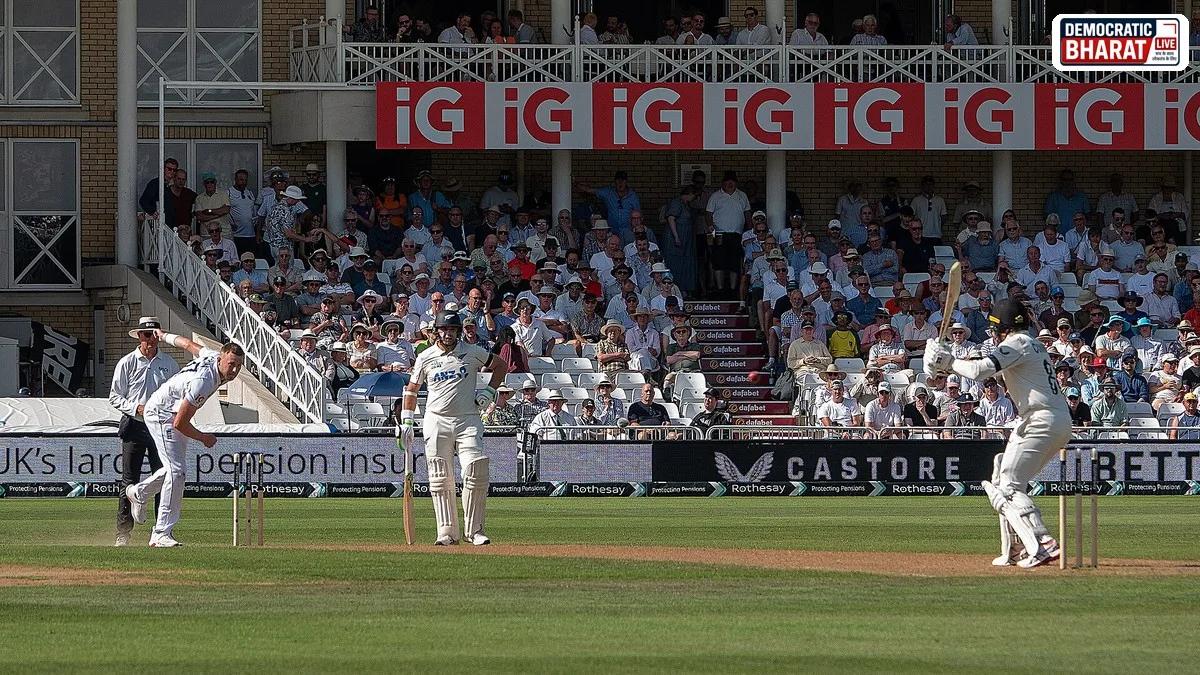
The follow on is a strategic rule in the traditional format of cricket that can significantly shorten a match while increasing the pressure on the trailing team. When a team bats first and posts a commanding total, the opposing team must reach a specific run threshold to avoid batting again right away. If they fail to meet this target, the captain of the leading team has the option to enforce the follow on, sending the opponents back to the crease instead of taking their own turn with the bat. This unique mechanism is deeply embedded in the heritage of international red ball cricket, representing a psychological and physical hurdle for any batting lineup that underperforms in their initial outing.
इस खबर में
This mechanism is designed to save time in matches where one side dominates the opening phases. By eliminating the third innings of the traditional sequence, the leading team can press for an outright victory without needing to bat a second time. However, choosing to enforce the rule carries tactical risks, as bowlers may suffer from fatigue and the pitch can deteriorate in ways that aid the chasing team later in the game. Captains must weigh the physical toll on their bowling attack against the immense advantage of having multiple sessions to bowl out the opposition for a second consecutive time.
Furthermore, the decision to enforce the follow on often alters the entire narrative of a five day fixture. Spectators and analysts alike scrutinize the scoreboard the moment the first innings concludes, calculating whether the deficit crosses the mandatory threshold. The ruling places immense pressure on the batting side to avoid the follow on entirely, turning what might otherwise be a routine accumulation of runs into a tense battle for survival. Teams strive to cross the threshold simply to regain psychological parity and ensure they do not become the victims of an innings defeat.
Understanding the Run Margins
The primary requirement for enforcing the follow on depends entirely on the total number of days scheduled for the match. In a standard five day Test match, the team batting second must trail the first innings total by at least 200 runs. If the deficit is less than this margin, the team that batted first must begin their second innings according to the normal sequence of the game. This 200 run cushion serves as a vital buffer for teams that encounter difficult batting conditions early in a fixture.
For matches with a reduced duration, the required deficit decreases proportionally to fit the available playing time. In a four day match, the trailing margin is reduced to 150 runs, while three day or two day matches require a deficit of 100 or 50 runs respectively. These specific figures ensure that the rule remains relevant regardless of the overall length of the fixture, accommodating domestic multi day competitions and historical variations in scheduling.
Captains must evaluate these margins carefully before making a decision. Even if the statistical threshold is met, environmental factors such as weather forecasts and pitch conditions often dictate whether the fielding captain decides to enforce the follow on or rest the bowling attack. For instance, if heavy rain is predicted for the final days of the fixture, enforcing the follow on becomes an absolute priority to secure a result before weather abandons the contest.
Strategic Advantages and Risks
Enforcing the follow on offers several distinct advantages for the dominant team. The most obvious benefit is the preservation of time, giving the bowling attack two full opportunities to dismiss the opposition without the pressure of setting a target. This extra time can be crucial in matches interrupted by rain or bad light, where every session counts toward achieving a decisive result. Moreover, batting last in a Test match often presents significant hazards as pitches deteriorate, making the avoidance of a fourth innings run chase a major tactical victory for the team that batted first.
Read this also: Understanding the Evolution and Impact of Powerplay Rules in Cricket
On the other hand, the strategy presents notable risks. Bowlers who have already exerted themselves through a long first innings must return to action with minimal rest, which can lead to physical exhaustion and reduced bowling effectiveness. Fast bowlers, in particular, require adequate recovery time, and forcing them back onto the field too quickly can lead to injuries or a noticeable drop in pace and accuracy. When the bowling attack lacks freshness, resilient batsmen can exploit the situation, blunting the attack and gradually erasing the first innings deficit.
Furthermore, pitches in Test cricket often flatten out or break up as the match progresses, potentially making batting easier for the trailing team during their second attempt. History shows numerous instances where teams enforced the follow on only to lose the match. These memorable turnarounds highlight the psychological shift that can occur when a dismissed team regroups and mounts a spirited defense, using the follow on as motivation to alter the course of the game and turn a certain defeat into an improbable triumph.
Historical Evolution of the Rule
The follow on rule has undergone several modifications since its inception in early cricket history. Originally, the margin required to enforce the rule was significantly lower, allowing teams to enforce it much more frequently and dominate matches with greater ease. Over the decades, cricket authorities adjusted the numbers to balance the contest between bat and ball, ensuring that teams have a fair opportunity to recover from a poor first innings performance without facing an insurmountable mathematical barrier.
Discussions regarding the future of the rule occasionally surface among cricket administrators and analysts. Some suggest removing the option entirely to standardize the sequence of innings across all formats, while others advocate for maintaining the traditional feature as a core element of Test match strategy. Despite these periodic debates, the rule remains an integral part of how the longest format of the game is played and managed, preserving a delicate balance of strategy, endurance, and historical continuity.
For the most accurate and precise interpretations of cricket laws, players and fans should consult the official guidelines provided by the International Cricket Council. Understanding these regulations enhances the appreciation of the tactical depth involved in international cricket, shedding light on the complex decisions that captains make behind closed doors during a grueling five day encounter.
Frequently Asked Questions (FAQ)
What is follow on in test cricket?
The follow on is a strategic rule in the traditional format of cricket that can significantly shorten a match while increasing the pressure on the trailing team. When a team bats first and posts a commanding total, the opposing team must reach a specific run threshold to avoid batting again right away. If they fail to meet this target, the captain of the leading team has the option to enforce the follow on, sending the opponents back to the crease instead of taking their own turn with the bat. This unique mechanism is deeply embedded in the heritage of international red ball cricket, representing a psychological and physical hurdle for any batting lineup that underperforms in their initial outing.
What should you know about Understanding the Run Margins?
The primary requirement for enforcing the follow on depends entirely on the total number of days scheduled for the match. In a standard five day Test match, the team batting second must trail the first innings total by at least 200 runs. If the deficit is less than this margin, the team that batted first must begin their second innings according to the normal sequence of the game. This 200 run cushion serves as a vital buffer for teams that encounter difficult batting conditions early in a fixture.
What should you know about Strategic Advantages and Risks?
Enforcing the follow on offers several distinct advantages for the dominant team. The most obvious benefit is the preservation of time, giving the bowling attack two full opportunities to dismiss the opposition without the pressure of setting a target. This extra time can be crucial in matches interrupted by rain or bad light, where every session counts toward achieving a decisive result. Moreover, batting last in a Test match often presents significant hazards as pitches deteriorate, making the avoidance of a fourth innings run chase a major tactical victory for the team that batted first.
What should you know about Historical Evolution of the Rule?
The follow on rule has undergone several modifications since its inception in early cricket history. Originally, the margin required to enforce the rule was significantly lower, allowing teams to enforce it much more frequently and dominate matches with greater ease. Over the decades, cricket authorities adjusted the numbers to balance the contest between bat and ball, ensuring that teams have a fair opportunity to recover from a poor first innings performance without facing an insurmountable mathematical barrier.